Most teams start from scratch every time. Dradis helps teams compound what they learn - building institutional knowledge that makes every engagement faster, more consistent, and less dependent on individual memory. And because Dradis is self-hosted, that expertise is permanently yours - not contingent on a vendor's roadmap, pricing, or business continuity.


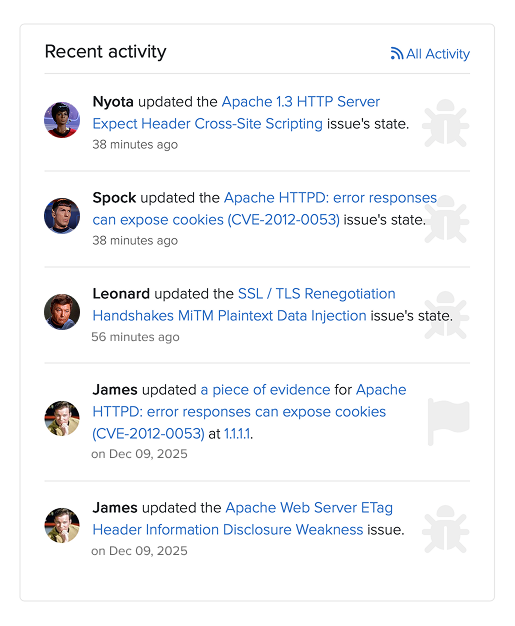
Your best consultant leaves. Their findings descriptions, client context, and hard-won insights go with them.
Every engagement starts from scratch. The same vulnerabilities get written up differently by different people.
New hires take months to reach quality. They can't access the institutional knowledge that would accelerate them.
Same finding, different severity. Same vulnerability, different remediation. Clients notice.
The pattern is always the same: expertise stays in people's heads instead of becoming organisational capability.
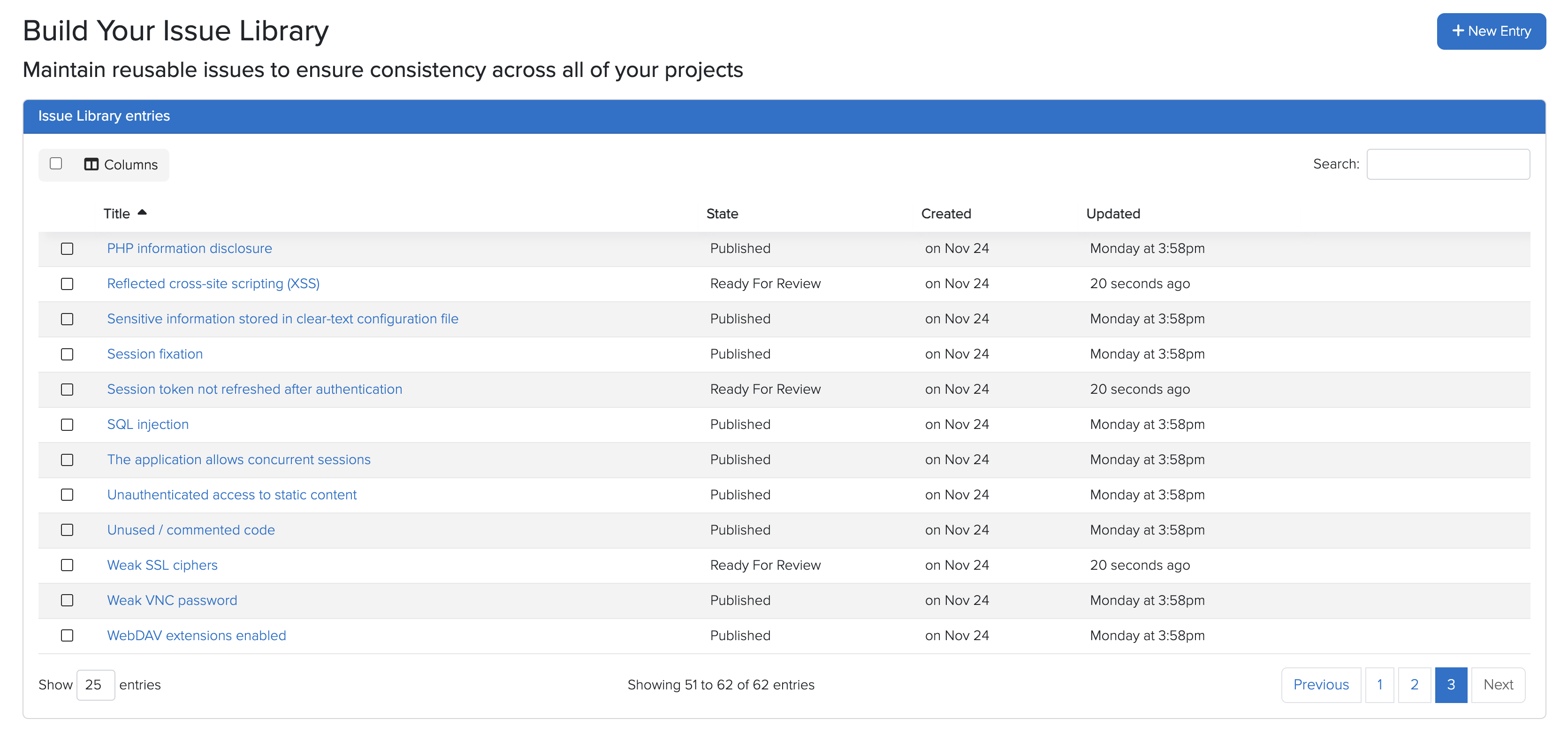
The Issue Library isn't just storage - it's institutional memory. When a consultant writes a better description, adds clearer remediation steps, or refines severity guidance, that improvement is available to everyone on the next engagement.
Your 100th SQL injection finding should be better than your first. With compounding expertise, it is.
Engagements in, your Issue Library has your most common findings refined and ready.
Engagements in, junior consultants produce senior-quality output from day one.
Engagements in, your reporting time is a fraction of where you started.
Your best reports didn't happen by accident. They reflect years of learning what clients need, how to present findings clearly, and what level of detail actually gets read.
Report templates capture that expertise. Every consultant uses the same structure, the same formatting, the same proven approach - without having to learn it from scratch.
Without compounding expertise:
With compounding expertise:
Your team has a way of working that produces results. But if it's not documented, it exists only in the heads of senior people - and disappears when they're busy, unavailable, or gone.
Methodology templates make your process explicit. OWASP, PTES, or your own custom approach - everyone follows the same steps, hits the same checkpoints, maintains the same standard.
Our concierge service delivers custom report templates, helps you set up your issue library, and Rules Engine mappings for your stack. You're shipping polished reports in no time.
Your Issue Library grows as testers refine findings with client-specific context. Junior consultants deliver senior-quality output because they start with your team's best work - not blank templates.
Your 50th project takes 1/3 the report time of your 10th - with better client feedback. Every engagement your team completes makes the next one faster and more consistent.
"Dradis is at the core of our quality management for every penetration test we do. From pre-test checklists to testing methodology through to generation of the final report it ensures we consistently maintain our high standards across engagements"
Marc Wickenden
Principal Security Consultant, 4ARMED
"We have a findings folder on SharePoint."
"We have a master template everyone uses."
"Ask Sarah, she knows how we do it."
"We use [SaaS tool] for reporting."
The Issue Library, templates, and methodologies aren't separate from the work - they're embedded in it. When a consultant uses a finding from the library, improvements flow back automatically. When they generate a report, the template is applied consistently. When they follow a methodology, it's tracked in the project. Knowledge compounds because it's structural, not aspirational. And because Dradis is self-hosted and open-source, the expertise your team builds is permanently yours - it doesn't live on a vendor's servers, and it doesn't disappear if you switch plans or the vendor changes direction.
A practical guide to building a delivery system that compounds - so your 50th engagement is faster and more consistent than your 10th.
Who it's for: Practice leads, delivery managers, and senior consultants at security consultancies who want to systematise what's currently tribal knowledge.
The Security Consultancy Delivery Playbook is on its way to your email.
Most teams have a useful Issue Library within 2-3 months of active use. After 10 engagements, you'll have your most common findings refined. After 50, you'll rarely write a finding from scratch.
The key is starting - even importing your existing findings descriptions gives you a foundation to build on.
Yes. Our onboarding includes converting your existing report templates, importing your vulnerability descriptions, and setting up your methodologies.
You don't start from zero - you start from your current best work.
Dradis includes tools for managing library quality: you can mark findings as approved, track versions, and control who can edit.
Most teams designate a library owner who reviews and approves changes periodically. The structure encourages curation rather than chaos.
Your data stays yours. You can export your entire Issue Library, templates, and project data at any time. There's no lock-in - the knowledge you build belongs to you.
Junior consultants get access to your team's compounding expertise from day one. Instead of writing findings from scratch and guessing at severity, they pull from the Issue Library and apply your proven templates.
Senior review time drops because the baseline quality is already high. Most teams see junior ramp-up time cut in half.
Your email is kept private. We don't do the spam thing.