For the pentest consultancy that never puts a client's findings on another company's servers

Every report in the mandated format, to your standard, whoever on your team wrote it.

  • A laptop inside the client's air-gapped network, a box in your rack, or your own cloud tenant. Same product, every feature.
  • Quality standards met from the new hire's first report. The findings, the methodology, and the template your seniors vetted are already there.
  • Your best XSS write-up, written once, is in every report after it. Project 100 draws on projects 1 through 99.

Dradis runs on your infrastructure, never ours. We build your templates. Same testers, more engagements a year.

Get Started
On-Premises Private Cloud Air-Gapped AWS Azure GCP
Six ways to host it. We never see your clients' findings.

What stops happening when the team uses Dradis.

Consistent results, automated reports, and easy collaboration.

  • Findings go in as you find them, in their final form: the library write-up plus the specifics. Reporting day is for the Executive Summary and a 1-click export.
  • The finding you were about to write from scratch is already there, and better than you had in mind. The whole team has refined it.
  • 47+ scanners import into one schema, in your wording and your risk ratings.
  • See scope coverage without asking. No consolidation day, no nagging.
  • Methodologies you will use, because the checklist is in the project, not in a PDF. Improve a step, and the whole team has it on their next project.
  • Every conversation next to the finding it is about with PR style reviews.

Manual Process

Copy & paste errors, partially followed processes, and endless email chains.

  • Spend way too much time reporting
  • Search old reports, copy & paste, make mistakes
  • Combining output is possible, but time consuming
  • Nobody knows what anyone else is doing
  • Methodologies exist (somewhere — but nobody uses them)
  • Evidence in a folder, the conversation in Slack, the fix confirmation in an email

Everything that turns testers' findings into the client's report

The whole engagement in one place: scoping, the test, the report, the re-test

  • Your client answers scoping questions online. The answers are in Dradis before kickoff.
  • Your client reads findings in the portal and asks the testers about them there. A suspected false positive is settled in the thread, not by email.
  • The re-test runs in the same project, or in a clone of it when months have passed.
From scoping to re-test in one platform
Dradis project dashboard showing engagement workflow

Send us the report you deliver today. We send back the template

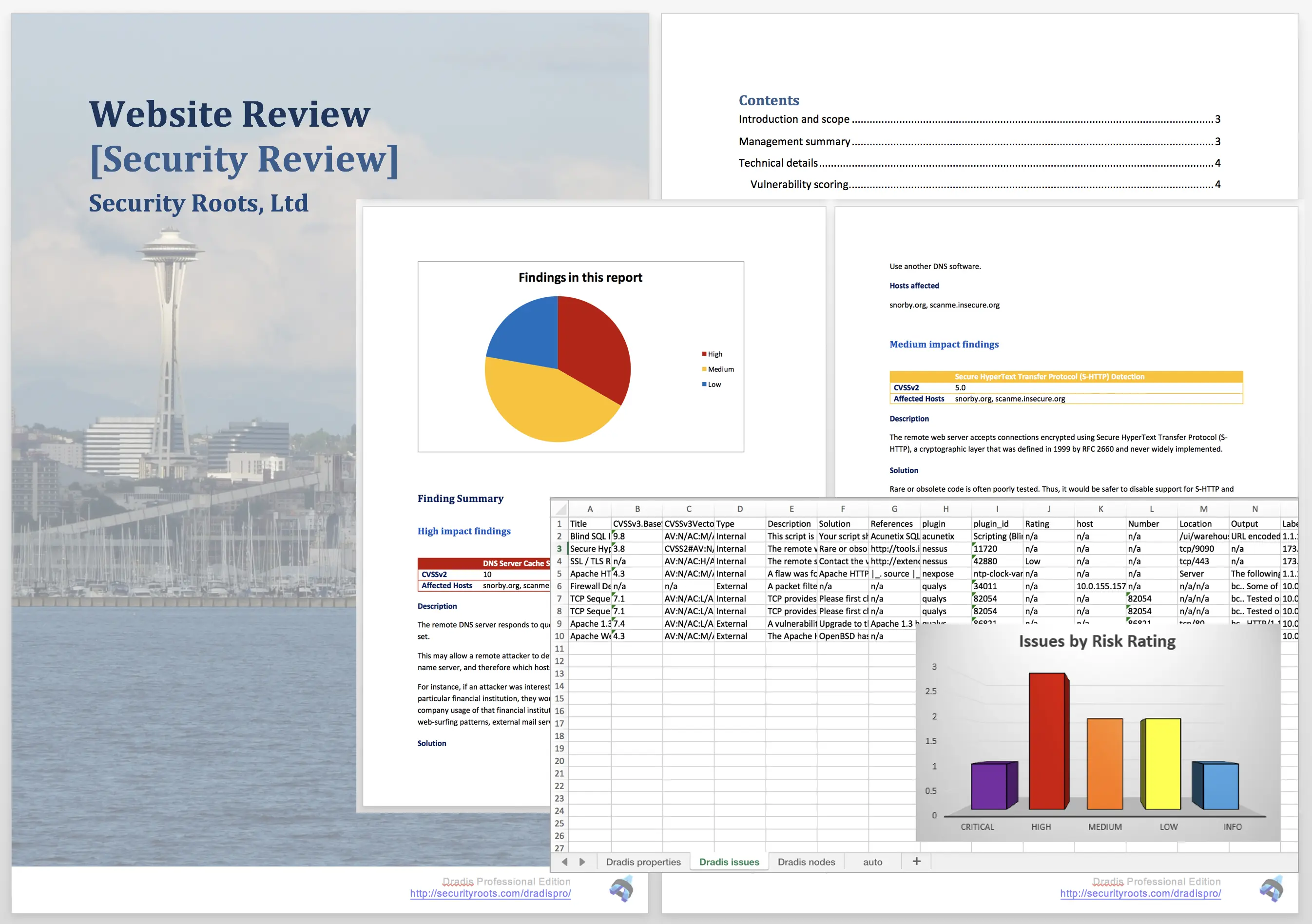
Your exact format: 1,182+ templates converted since 2010 by a reporting engine built for one job, cybersecurity assessment reports. Not a third-party Word library.

One click generates the report, Word or Excel. The tester is on the next project, and the report reads like a senior wrote it.

An LLM helps draft the description and adapts the wording to the audience. Run it on your own hardware, or point it at a frontier model. Nothing leaves your network (unless you choose to).

More about automated reporting
Example Dradis report showing consistent formatting

47+ scanners in. Your client reads your words, your rating, your advice

The Rules Engine maps each scanner's output to your library entry, deduplicates, and drops what you never report. Write the rule once; every import applies it.

One schema per service line. The webapp project and the internal pentest each have their own fields and their own report template.

The universal CSV importer takes any CSV as it is. No reformatting to our columns. Or, being open-source, you can write the plugin: all scanner plugins are on github.com/dradis to start from.

Webhooks and a REST API with scoped tokens: an agent gets access to the one project it needs, not to everything its owner can see.
Browse all integrations
  • Nessus logo
  • Nexpose logo
  • Nikto logo
  • Nmap logo
  • Burp Pro logo
  • Qualys logo
  • w3af logo
  • Zed Attack Proxy (ZAP) logo
  • MediaWiki logo
  • OpenVAS logo
  • Open Source Vulnerability Database (OSVDB) logo

Reporting day is not consolidation day

Each finding is reviewed as it goes in. A missing screenshot is taken while access still exists, not discovered on reporting day.

Review like a pull request: inline comments and threads on each finding, a revision history, and a review state (Draft, Ready for Review, Published) that the export respects.

Testing inside an air-gapped network? Run Dradis on your laptop, and import the findings back when you return to the office.

On a six-week assessment with three testers, the client wants a weekly update.

  • It used to mean sorting and formatting everything by hand.
  • Now it is one click, and findings added later go into the right section on the next export.
Explore the shared workspace
Dradis collaboration features showing team coordination

Same finding, same rating, whoever found it

Two testers, the same finding, two risk ratings, and the client calls to ask which one is right. The rating and the write-up are the team's, not the tester's.

  • Built-in QA workflows to ensure you're hitting your high standards.
  • Found an Oracle database? The methodology for it is already here, written by the expert in your team.
  • A tester submits a better write-up; after review, every colleague has it on their next project.
  • No folder of old reports on anyone's laptop. The reusable write-ups are in the library, and the findings are on your server. A phished laptop does not contain every report the tester was involved in.
See how the standard holds across the team
Methodology Kanban board: assign tasks, provide guidance, gather evidence

The critical finding reaches your client the day it is found, not weeks later with the final report

Public comments for the client, a private thread for the team, side by side on the same finding.

Every engagement adds to the client's history: their findings, their trend, across every test you have run for them.

A one-off PDF cannot show a trend. Your portal can, and whoever bids against you starts from a blank page.

Your infrastructure, your domain, your brand: the client reads their findings without a third party ever holding them.

Create a relationship, not a transaction
Dradis Gateway portal showing real-time client results

19 years. 1,182 teams. 81 countries.

And 1 in 9 of the Fortune 100 has run Dradis on its own infrastructure.

  • Booz Allen logo
  • HP Enterprise Security logo
  • Deloitte logo
  • The Home Depot logo
  • TUV SUD logo
  • Orange logo
  • Vodafone logo
  • VMware logo
  • Tangible Security logo
  • Investec logo
  • Unipart Cyber Security logo
  • SecWatch logo

Your standard, held from the pre-test checklist to the final report.

Mark's picture

"Dradis is at the core of our quality management for every penetration test we do.
From pre-test checklists to testing methodology through to generation of the final report
it ensures we consistently maintain our high standards across engagements."

Marc Wickenden
Principal Security Consultant, 4ARMED

Your clients notice. So do the testers you want to hire.

Erik's picture

"I see Dradis not just as a way to save time and money for clients, but as a recruiting tool.
Consultants are motivated by wanting to hack new and interesting technologies.
So if they can come to Include and spend less time reporting and more time hacking, then they're happier consultants."

Erik Cabetas
Managing Director, Include Security

Where are you starting from?

Reporting manually?

Every engagement starts from nothing. The best write-up your senior wrote last quarter is buried in a client PDF, or in their personal folder, one resignation away from being gone.

Dradis ends that cycle: the write-up goes into one shared, versioned library, and every project after it starts from there.

  • The best write-up becomes the team's
  • Same finding, same rating, whoever found it
  • Reports in your format from the first engagement
  • We build your template; onboarding is done with you, not left to you
Compare with manual reporting

Switching from cloud SaaS?

Your write-ups library, your templates, and every client finding live on someone else's servers, subject to their pricing, their roadmap, their runway.

With Dradis, all of it runs on your infrastructure, and it is yours if you ever leave.

  • Your template, converted by us, not rebuilt by you
  • We never see your clients' findings
  • Export the library and the templates any time
  • 19 years of releases, self-funded since 2010, no pivots
  • Support from a team averaging seven years on Dradis
Compare with cloud SaaS

Maintaining an internal tool?

The first 80% was fun. The other 20% is the Nessus parser that broke on the last update and the feature requests nobody has time for.

The feature you will need next year is probably already in, because another team asked for it first.

  • 47 integrations on day one, most of them open source
  • Fork it, extend it, write the plugin we do not have yet
  • Nobody on your team is on call when it breaks
  • Every release ships features other teams asked for. No extra cost, no work on your side.
  • Predictable costs with no surprises at renewal
Compare with building your own
Photo of Erik Cabetas

"Creating reports with Dradis Pro saves us up to 4 hours per project compared to using Word manually."

Erik Cabetas
Managing Director, Include Security

Photo of Alexander C.

"Dradis is an amazing tool. I've used tons at other organizations and I always recommend Dradis."

Alexander C.
Chief Executive Officer, Kage Okami

Photo of Andrew Cho

"We no longer have a dependency on app developers for an internal reporting tool, or the costs of maintaining a reporting tool."

Andrew Cho
Cybersec Risk Engineer, Schneider Electric

Dradis vs Alternatives

Dradis Cloud SaaS Build-your-own
Data control & security ✓ Variable ✓
Vendor independence ✓ ✗ ✓
Predictable costs ✓ Possible ✗
Support & updates ✓ ✓ Must maintain
Who runs it You Them You

Build-your-own gives you code ownership but requires your team to build and maintain the compounding layer - Issue Library, Rules Engine, methodology tracking - that Dradis ships on day one.

And it gets better every month.

What is the best tool for our team?

Featured On

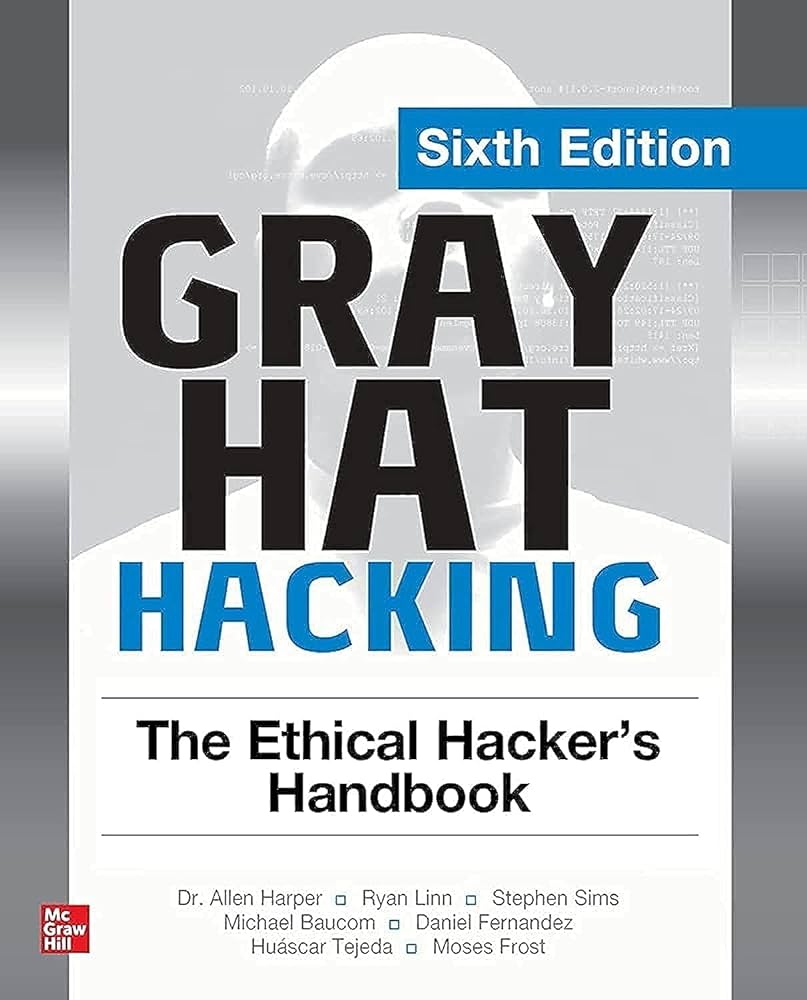
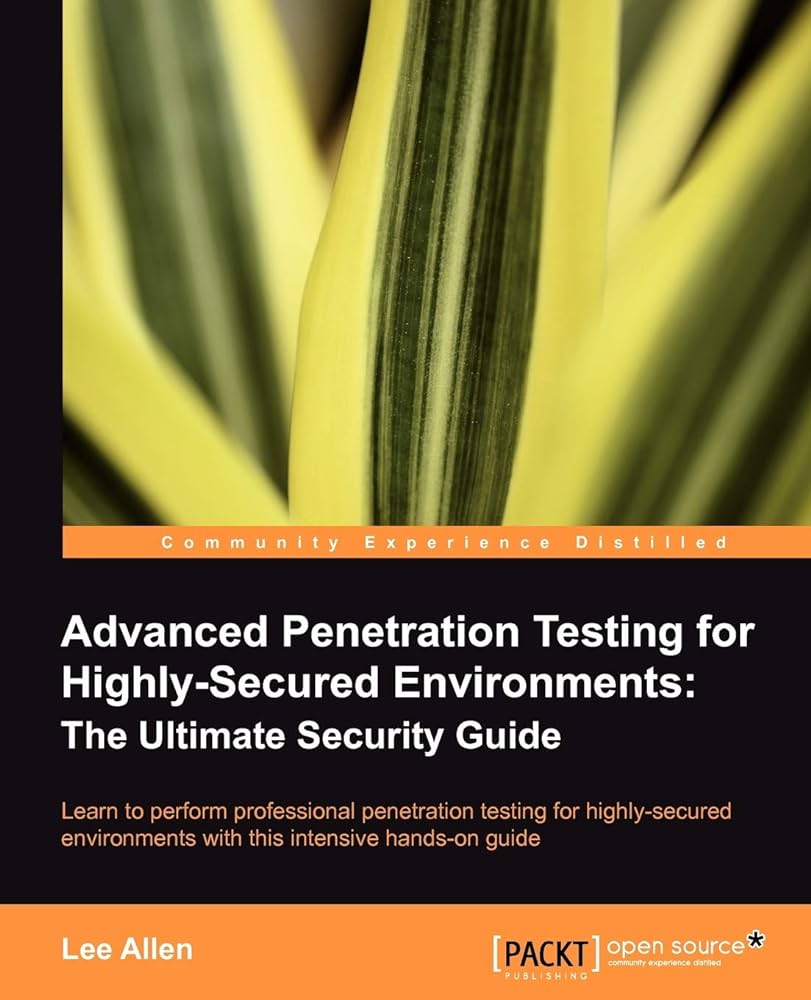
Featured in Security Books

Presented at Security Conferences

Covered by Security Media

Twenty minutes. A whole engagement, three different report templates.

A Dradis expert runs an engagement end to end: scoping answers in, scanner output through the Rules Engine, findings reviewed, the client reading them in the portal, and the report out as an infrastructure test, an OWASP web app test, and a red team engagement.

In 20 minutes, we'll cover:

  • Scoping, testing, review, portal, report: the whole span in one sitting
  • Three service lines, three different templates, one click each
  • What the self-hosted install looks like in your environment

🕒 20 minutes | 🎯 Custom to your workflow | 💬 Led by a Dradis expert

Loading form...

Explore Dradis Solutions

Manage Pentest Engagements

From scoping to re-test in one platform.

Automate Pentest Reporting

Your format, one click. We build the template.

Standardize Findings and Process

Same finding, same rating, whoever found it.

Team Collaboration

Review like a pull request. No consolidation day.

Sharing Pentest Results

Your client reads findings in your portal as you publish them.

Intelligent Automation

Webhooks, a REST API with scoped tokens, the Rules Engine.

Trusted in by

Find out why!

Seven Strategies To Differentiate Your Cybersecurity Consultancy

You don't need to reinvent the wheel to stand out from other cybersecurity consultancies. Often, it's about doing the simple things better, and clearly communicating what sets you apart.

  • Tell your story better
  • Improve your testimonials and case studies
  • Build strategic partnerships

Loading form...

Your email is kept private. We don't do the spam thing.