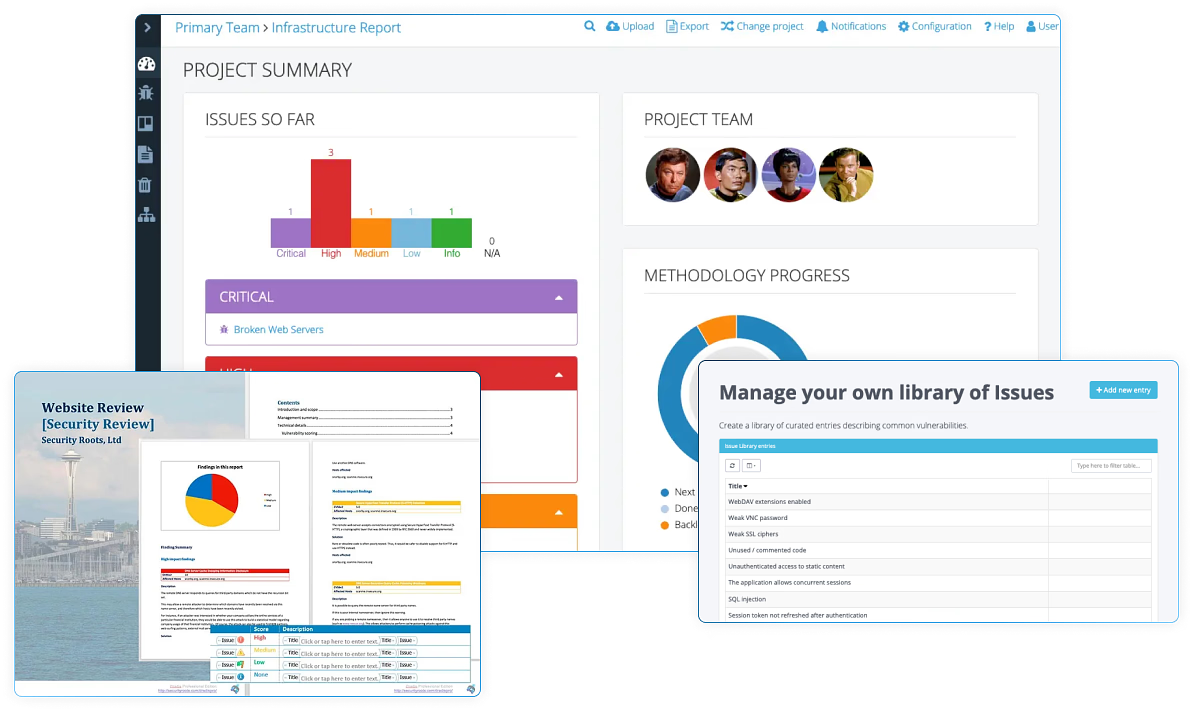
Pentesting project data is some of the most sensitive data that exists. Sending it to a third-party cloud is not a trade-off most security teams should accept.
Dradis is self-hosted. Your findings, your issue library, your methodology refinements - everything your team builds - lives on infrastructure you own.
And if you ever stop using Dradis, everything your team built is still yours.
Dradis is built on an open-source foundation. That means you can read every line of code and verify - not trust - that your findings stay where they should. With a proprietary SaaS tool, you take the vendor's word for it. With Dradis, you can check.
It also means you can extend the platform beyond what any API exposes - custom connectors, modified workflows, compliance-specific adaptations. With AI coding tools making that work faster than ever, the right move is to build on top of a proven, self-hosted platform rather than rebuild one from scratch.
Because the core is open, the platform can never be deprecated against your interests or changed in ways you haven't reviewed. If Dradis ceased operations tomorrow, your instance keeps running.
We're also self-funded and profitable. No investors. No pivots. No surprises.
The community reflects that: 1,000+ clones each month, 821+ ⭐️s on , an active forum and Slack, and strong daily development.


Deploy on-premises, in your private cloud, or on a standalone laptop for air-gapped environments. AWS, Azure, GCP - or entirely offline. Dradis ships as a Docker container, so standing up your own instance is a one-command operation.
For teams operating in classified facilities, conducting assessments at client sites without internet access, or working under data residency requirements that prohibit sending findings to an overseas cloud provider, this isn't a nice-to-have. It's the only viable architecture.
No cloud dependency. No connectivity requirement. No data crossing a border you haven't approved.
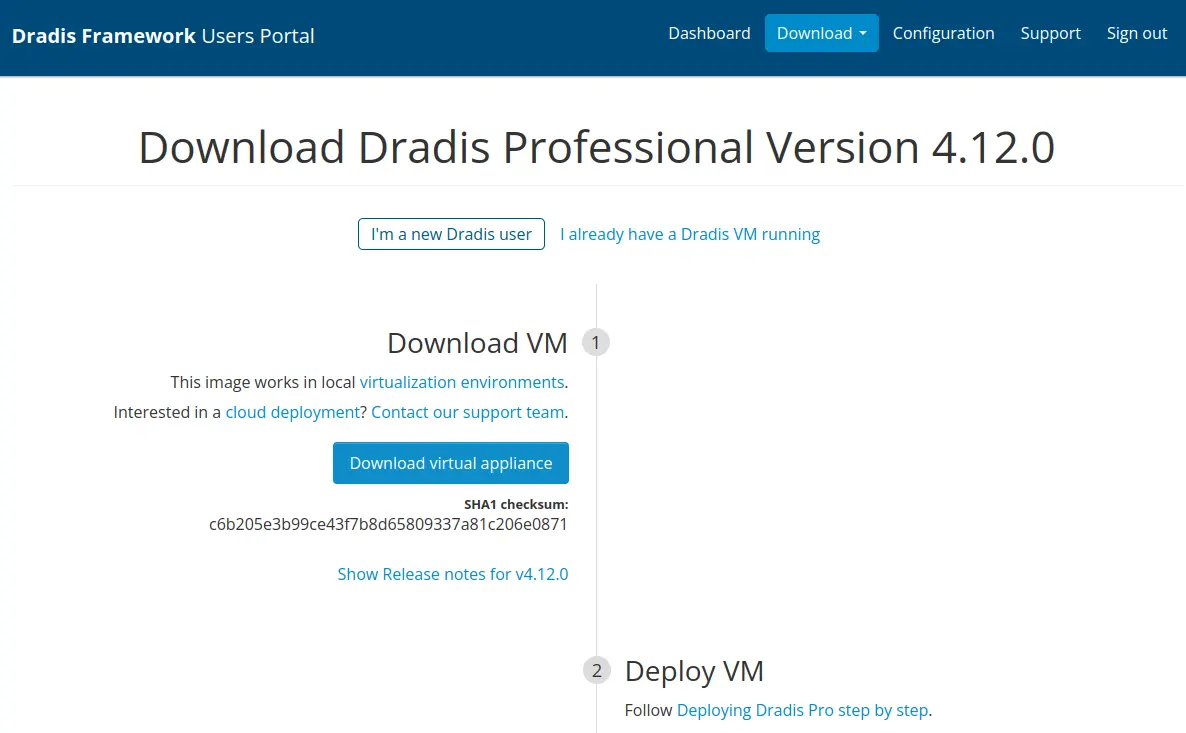
The longest-running platform in this space. 19 years means we have seen more tool evolutions, scanner edge cases, and report format failures than any newer platform has encountered.
The community validated Dradis over these years: textbooks, conference appearances, and Linux testing distribution inclusions... that no competitor can yet match.
1,179 teams in 81 countries and counting.


Our support team brings an average of 6 years of experience with Dradis, ensuring you get expert guidance from those who know the platform inside and out.
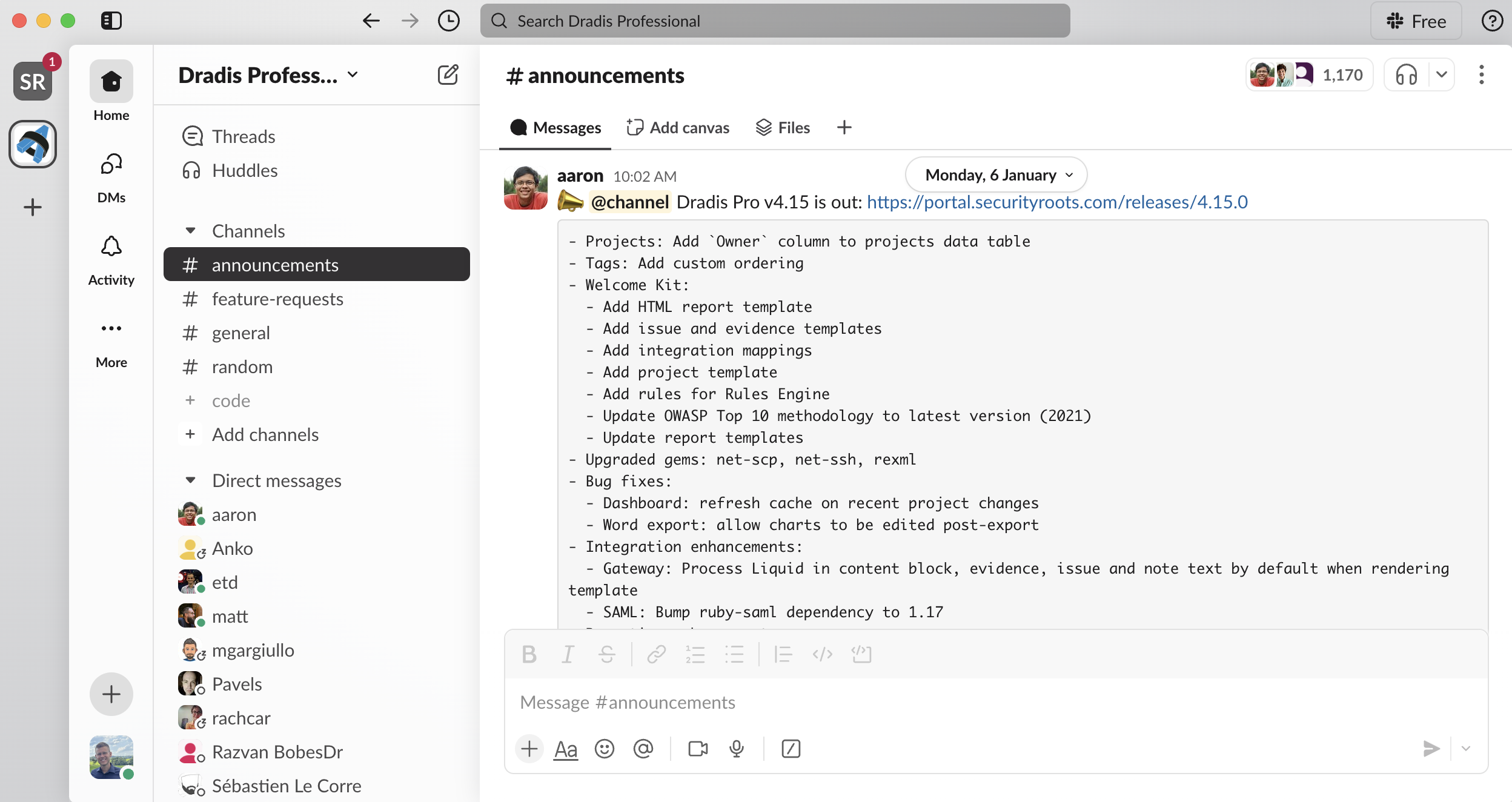
You'll have direct access to support via email and our Slack channel, plus the opportunity to join a thriving community of Dradis users, where you can share insights, ask questions, and collaborate with other security professionals.
Your team's best work - refined findings, proven templates, tested methodologies - accumulates permanently across every engagement. Because it lives on infrastructure you control, it stays yours regardless of vendor decisions, pricing changes, or business continuity.
How expertise compounds in Dradis →Every change, every review, every approval - tracked and verifiable. When a client or auditor asks who changed what and when, Dradis has the answer. No manual log, no assertions you cannot back up.
How audit traceability works in Dradis →Your engagement keeps running when connectivity doesn't. In classified facilities, at client sites, in air-gapped environments - Dradis operates with no external dependencies and no data leaving the perimeter.
How Dradis keeps you operational →A competitor can add an issue library. Another can offer on-prem deployment. But offering compounding expertise that is permanently yours, full audit traceability, and operational continuity in air-gapped environments - all on an open-source, self-funded platform - that is not a feature set. That is a different set of values entirely.
Every engagement, your team starts from nothing. The sharpest finding your senior wrote last quarter is buried in a client PDF - or in their personal folder, one resignation away from being gone. Dradis ends that cycle. Your team's expertise accumulates in a shared, versioned library that gets sharper with every project.
With a cloud platform, your accumulated findings, issue library, and methodology refinements live on someone else's infrastructure - subject to their pricing, their roadmap, and their runway. With Dradis, everything your team builds is permanently yours. Self-hosted. Open-source core. No vendor dependency.
Building your own tool gives you code ownership - but requires your engineering team to build and maintain the compounding layer: the Issue Library, Rules Engine, methodology tracking, QA workflows. Dradis ships that layer on day one, built on open-source you can inspect, fork, and extend without starting from scratch.

"Creating reports with Dradis Pro saves us up to 4 hours per project compared to using Word manually."
Erik Cabetas
Managing Director, Include Security

"Dradis is an amazing tool. I've used tons at other organizations and I always recommend Dradis."
Alexander C.
Chief Executive Officer, Kage Okami

"We no longer have a dependency on app developers for an internal reporting tool, or the costs of maintaining a reporting tool."
Andrew Cho
Cybersec Risk Engineer, Schneider Electric
Yes. Dradis is deployed on your own infrastructure - on-premises, in your private cloud, or even on an air-gapped laptop. Your data never leaves your environment.
There's no third-party cloud storage, no AI training on your data, and no vendor access to your projects.
You retain full control at all times.
Dradis is built on an open-source foundation. The Community Edition is fully open source and available on GitHub.
Dradis Pro builds on that foundation with additional features, integrations, and dedicated support.
Because the core is open, you can extend and customise the platform to fit your workflow - with no vendor lock-in risk.
Dradis supports 47+ integrations out of the box, including Nessus, Burp Suite, Nmap, Qualys, and many more.
You can automatically import scanner output, combine results from manual and automated testing, and generate reports without switching between tools.
If you use a tool we don't support yet, our open architecture makes it straightforward to build a custom connector.
Yes. Dradis can be deployed on-premises, in a private cloud (AWS, Azure), or on a standalone laptop for air-gapped environments.
This makes it ideal for teams working in secure facilities, on client sites, or anywhere without reliable internet access. Learn more about deployment options.
Dradis Pro includes dedicated support from a team that averages 6 years of experience with the platform.
You get direct access via email and a private Slack channel, plus onboarding assistance including deployment help, custom template conversion, and hands-on training.
There's also an active community forum for peer collaboration.
Not at all. Dradis can generate reports in Word, Excel, CSV, and HTML formats using fully customizable report templates.
If you want to go beyond static reports, Dradis Gateway provides a dynamic, interactive portal where stakeholders can view assessment results in real time — no report generation needed.
Because Dradis is built on open-source, your instance keeps running regardless of what happens to us. You have the source code, you can maintain it, or fork it. Your data, your Issue Library, your templates - none of it is held hostage by our business continuity.
For the record: we've been self-funded and profitable since 2010. No investor pressure, no forced pivots, no runway to run out. But we'd rather you chose Dradis knowing you're not dependent on us either way.
In 20 minutes, we'll cover:
🕒 20 minutes | 🎯 Custom to your workflow | 💬 Led by a Dradis expert
Loading form...
Loading form...
Your email is kept private. We don't do the spam thing.