- AI pentesting
- Key Takeaways
- Does this apply to your team?
- What AI pentesting tools actually do
- The downstream problem: 300 findings in a morning, 15 in the report
- The second data exposure point your team hasn't considered
- Humans do depth. AI does breadth. The team needs a coordination layer.
- What a structured AI pentesting workflow produces over time
- Practical next steps
- Related content
- Frequently asked questions
AI pentesting
Management is asking whether your team uses AI. The honest answer is probably yes, somewhere: a tester running Nuclei AI templates, a junior analyst using Burp's AI-assisted scanning, someone feeding Nessus output into a custom script…
We've written about shadow AI in pentesting elsewhere, the harder question is: what happens to the findings once the AI tool finishes running?
Three hundred candidates from an AI scanning pass on a web application scope. Which 15 go in the report? Who verifies them? Where do the findings arrive next, and who controls that infrastructure?
Every page in the top 10 for "ai pentesting" is a vendor selling an AI scanning product or a VC firm explaining why AI will change security. Nobody is writing for the team lead who needs to evaluate what AI adoption actually means for their testing workflow, their findings quality, and their client data.
We'll give it a try.
Key Takeaways
- AI pentesting tools (Aikido, Pentera, Nuclei AI, Escape.tech, BreachLock) are good at breadth-first vulnerability discovery at speed. What they don't solve is the downstream problem: triage, deduplication, quality control, and data residency for the findings they generate.
- You want to stop ignoring what happens to your data when you ask Claude or ChatGPT for help during your pentests.
- A single AI scanning pass can surface 80-400 finding candidates. Most teams report 15-40 verified findings. The gap between those numbers is the workflow problem AI tools create.
- AI scanning tools process client network data and produce findings that describe the client's attack surface. If those findings then flow into a cloud-hosted reporting platform, the team has routed sensitive data through two vendors instead of one (and their downstream partners).
- Dradis is not an AI pentesting tool. It does not run scans or discover vulnerabilities. It is the self-hosted backend that makes AI pentesting results usable for teams that care about what happens to findings after the scanner runs.
- The Issue Library turns AI-surfaced findings into compounding team knowledge: every finding class your AI tools flag, written once to your standard, reused automatically across every future engagement.
- The honest division of labor: AI agents handle breadth-first discovery. Human testers handle depth-first verification and exploitation. A coordination layer is what connects the two.
Does this apply to your team?
This piece is for you if:
- Management is asking whether your team uses AI in pentesting and you need to evaluate what adoption means for your workflow
- You have tested or deployed AI scanning tools and the volume of findings has created a downstream processing problem
- You are concerned about adding a second vendor to the client data path when findings leave the AI tool and enter a reporting platform
- You want AI-surfaced findings to map to your team's quality standards, not scanner defaults
- You need a coordination layer where human and AI-generated findings converge in one triage workflow
Skip this if:
- Your team does entirely manual testing with no plans to adopt AI scanning tools
- You already have a findings management workflow that handles multi-tool AI output effectively
- You are looking for an AI pentesting tool recommendation (this piece covers the downstream workflow, not the scanning tools themselves. See the named tools above for scanning evaluation.)
What AI pentesting tools actually do
The "AI pentesting" label covers two categories that vendor marketing conflates:
AI-assisted vulnerability discovery. Tools that use AI to find things faster or find things manual testing would miss. Aikido Security runs AI-powered static analysis (SAST), software composition analysis (SCA), and cloud posture scanning. Escape.tech applies AI to API security testing and dynamic analysis (DAST). Pentera automates breach simulation and continuous pentesting across enterprise environments. Nuclei AI generates custom scanning templates using LLMs, extending its template library with target-specific checks. BreachLock combines AI-assisted scanning with human verification in a penetration testing as a service (PTaaS) model.
Of course, in 2026 either you're "AI" something, or you won't sell (you may remember the feel from past classics like "everything is threat modelling" or "blockchain solves your security problems").
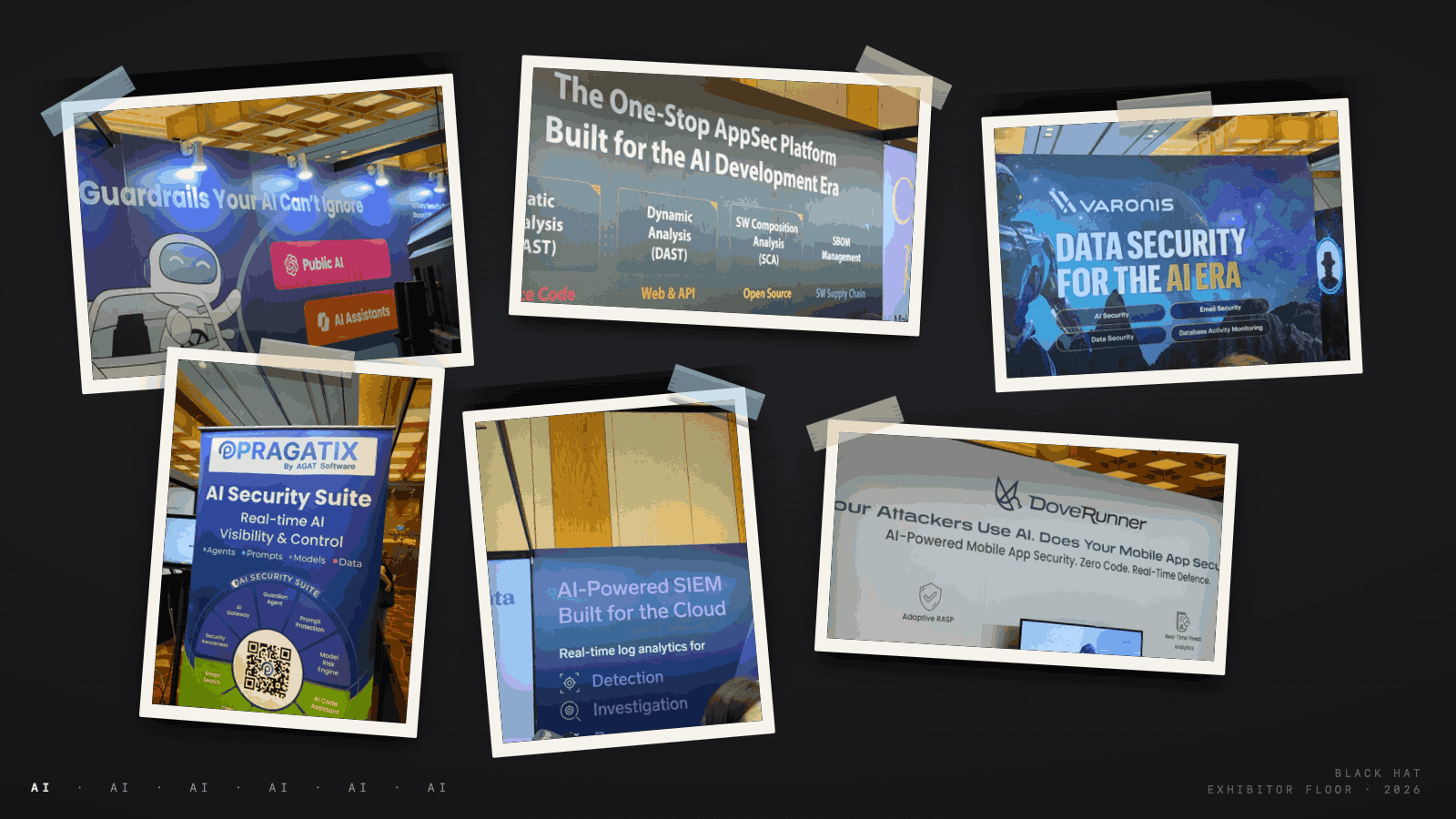
AI in reporting and write-up. Tools that use AI to help with the output side: rewriting finding descriptions, expanding remediation guidance, normalizing language. This is what Dradis Echo does. It runs locally on your hardware via Ollama, sends no finding data to external APIs, and operates within scoped permissions.
These are different problems. The first category creates findings. The second helps you write them up. Most of what gets called "AI pentesting" is the first category, and it is what's driving the management question your team is fielding.
The downstream problem: 300 findings in a morning, 15 in the report
AI scanning tools solve the discovery bottleneck. A manual web application assessment generates 10-25 findings that a tester has personally verified. An AI scanning pass on the same scope can surface 80-400 candidates.
That volume creates four workflow problems:
Triage at scale. Every candidate needs human review. Is this a true positive? Is it in scope? Is the scanner overscoring the severity? A tester processing 300 candidates to identify the 15-40 that belong in the report is doing verification work that didn't exist at this scale before AI scanning tools entered the stack.
Findings ownership. In a manual engagement, the tester who found the vulnerability owns it through to the report. With AI-surfaced candidates, assignment is ambiguous. Who verifies the SQL injection the scanner flagged? Who decides the 14 XSS candidates from the crawler are actually 3 distinct findings? Without a coordination layer, findings fall through gaps or get duplicated in the report.
Quality control on AI output. AI scanners have non-trivial false positive rates. A finding that goes from scanner output to client report without human verification is a professional liability. The team needs a workflow that enforces human sign-off before findings reach the deliverable.
Schema incompatibility. AI scanning tools don't agree on data formats any more than traditional scanners do. Pentera's output structure is different from Nuclei's YAML/JSON template format, which is different from Aikido's findings schema. Running two AI tools against the same scope produces two incompatible finding sets that need normalization before they can share a report.
The second data exposure point your team hasn't considered
An AI scanning tool ran on your client's network. The findings it generated describe the client's attack surface in detail: specific vulnerabilities, affected hosts, exploitation paths. That data is sensitive.
Now those findings need to go into a reporting platform for triage, write-up, and client delivery. If that platform is a cloud-hosted SaaS, the team has added a second vendor to the client data path. The AI tool was the first. The reporting platform is the second. Two separate vendors handling the same client's vulnerability data, each with their own security posture, data handling policies, and breach exposure surface.
And what if your cloud SaaS has AI features for reporting? On the data goes…
For most teams evaluating AI pentesting tools, the conversation stops at the tool itself: does it find things? Is it accurate? Those are valid questions. But the data residency question extends downstream. The AI scanner processed the data. Where do the findings go next?
An alternative is a self-hosted platform with local AI in the reporting layer.
Humans do depth. AI does breadth. The team needs a coordination layer.
The real framing of AI pentesting is not "AI replaces testers." It is a division of labor.
AI agents run breadth-first discovery: wide coverage, fast execution, pattern-matched findings across large scopes. They are good at covering surface area the team would not have time to test manually. They are not good at business logic flaws, chained exploitation, or anything requiring judgment about the application's actual purpose.
Human testers run depth-first verification and exploitation: confirming scanner candidates, chaining findings into attack narratives, evaluating business impact, and writing the assessment context that turns a finding list into a professional deliverable.
Both streams produce findings. Those findings need to converge into one project, one triage workflow, and one report. A human tester needs to see which AI-flagged candidates have been verified, which are pending review, and which were dismissed as false positives. An AI scanning pass shouldn't create a separate work stream that the tester has to manually merge at report time.
Dradis is the coordination layer. AI tool output enters through structured importers and the Rules Engine. Human findings enter through the project interface. Both arrive in the same project structure, subject to the same Issue Library normalization, the same deduplication logic, and the same report template. The methodology board tracks the human verification workflow on top of the AI-generated finding list.
Of course, you can show your custom AI agents how to the platform through our API and fine-grained Personal Access Tokens (PAT). We wrote an article about how we used Claude to audit Dradis, and Dradis to report the findings.
The result: one project view where AI breadth and human depth are visible together. No parallel spreadsheets. No merge step at the end.
What a structured AI pentesting workflow produces over time
The compounding argument applies more strongly when AI tools are involved.
Manual testing generates 10-25 findings per engagement. The Issue Library grows slowly. AI scanning generates 80-400 candidates per engagement, many of which map to known finding classes the team has documented before. The library grows faster because the same vulnerability classes show up with higher frequency.
When the Rules Engine matches an AI-generated finding to a curated Issue Library entry, the client gets your team's description, not the scanner's vendor-generated boilerplate. Quality control on AI output becomes systematic rather than dependent on individual tester judgment. Two testers reviewing the same AI-flagged XSS apply the same Issue Library entry and the same severity. The report is consistent regardless of who triaged it.
Over time, the team builds a library that maps directly to the finding classes their AI tools surface most often. Project 50 benefits from every finding class documented in projects 1 through 49. That library lives on infrastructure the team controls, permanently. It is not tied to a SaaS subscription that could change pricing, deprecate features, or get acquired.
Practical next steps
- Map the AI scanning tools your team currently uses or is evaluating. Note what output format each produces and whether your reporting platform can ingest it.
- Evaluate where findings go after the AI tool runs: is it a cloud platform (second data exposure point) or infrastructure you control?
- Start an Issue Library seeded with the 20 finding classes your AI tools flag most frequently.
- Run a test engagement with AI tool output imported into Dradis: compare the triage time against your current manual process.
- Review the data sovereignty implications of your current AI pentesting data path.
Related content
AI and local processing
- Self-hosted AI for pentest reporting (Dradis Echo)
- Echo: local AI-assisted pentest reporting
- Shadow AI in pentesting: data leakage risks
Findings management and workflow
- Rules Engine: automated findings processing
- Issue Library: reusable finding descriptions
- Integrations directory
Data sovereignty
Frequently asked questions
Is Dradis an AI pentesting tool?
No. Dradis does not run vulnerability discovery, generate attack paths, or automate exploitation. It is a findings management and reporting platform. Dradis ingests the output of AI pentesting tools (and traditional scanners) through structured parsers, deduplicates and normalizes findings, and produces quality-controlled reports. It solves the downstream problem that AI scanning tools create, not the scanning problem itself.
What AI pentesting tools does Dradis integrate with?
Dradis integrates with 47+ security tools including Pentera, Nessus, Burp Suite, OpenVAS, Qualys, Nexpose, and Metasploit. For AI scanning tools without a built-in parser, Dradis's open-source architecture supports custom upload add-on development, allowing teams to build importers for any tool that produces structured output.
How does Dradis handle the data residency problem with AI pentesting?
Dradis is self-hosted. Findings from AI scanning tools arrive on infrastructure you control, not on a vendor's cloud. This eliminates the second data exposure point that exists when AI tool output flows into a cloud-hosted reporting platform. For teams in air-gapped or restricted environments, Dradis runs with no internet connectivity after installation.
What is Dradis Echo and how does it relate to AI pentesting?
Echo is Dradis's AI-assisted reporting feature. It runs via Ollama on your own hardware, sends no finding data to external APIs, and operates within scoped permissions. Echo helps with the reporting side: rewriting descriptions, expanding remediation guidance, and normalizing language. It is not a scanning tool. It complements AI pentesting tools by improving the quality of the output after findings have been imported and triaged.
Can AI replace human pentesters?
No, and the framing is wrong. AI scanning tools handle breadth-first discovery at scale: fast coverage across large scopes, pattern-matched vulnerability detection. Human testers handle depth: business logic flaws, chained exploitation, judgment calls about severity in context, and the professional assessment narrative. The question is not replacement but coordination. Both streams produce findings, and both need to converge into one quality-controlled deliverable.
See how AI scanning output and human findings converge in one structured workflow